boss dd 20 giga delay manual
Boss DD-20 Giga Delay: A Comprehensive Manual Overview (as of 04/14/2026)
Today, April 14th, 2026, this manual details the Boss DD-20 Giga Delay, offering comprehensive guidance for crafting diverse sounds, much like selecting supplies for creative projects.
Welcome to the world of expansive sonic textures! The Boss DD-20 Giga Delay isn’t merely a delay pedal; it’s a versatile sound design tool, akin to a crafter’s selection of diverse materials. This pedal empowers musicians to sculpt immersive atmospheres and rhythmic complexities, offering a palette of twelve distinct delay modes.
From pristine digital repeats to warm analog echoes and the innovative Cosmos delay, the DD-20 caters to a broad spectrum of sonic preferences. Like choosing the right yarn for a project, selecting the appropriate delay mode is crucial. This manual serves as your guide, detailing each parameter and function to unlock the full potential of this powerful pedal. Explore preset management, advanced routing, and external control options – all designed to inspire creativity and elevate your performances.
Understanding the DD-20’s Core Delay Technologies
The DD-20’s strength lies in its diverse delay engines. Much like Hobby Lobby offers varied craft supplies, the DD-20 presents a spectrum of delay characteristics. At its heart are meticulously modeled digital, tape, and analog delay circuits, each offering a unique sonic fingerprint. Digital delays provide pristine clarity and precise timing, ideal for clean repeats and rhythmic patterns.
Tape delay emulates the warmth and subtle imperfections of vintage tape machines, adding character and depth. Analog delay delivers a rich, organic tone with natural saturation. Beyond these core technologies, the DD-20 introduces Cosmos, a revolutionary delay algorithm creating ethereal and otherworldly soundscapes. Understanding these technologies is key to harnessing the DD-20’s full creative potential.
Digital Delay Modes: Standard, Tape, and Analog
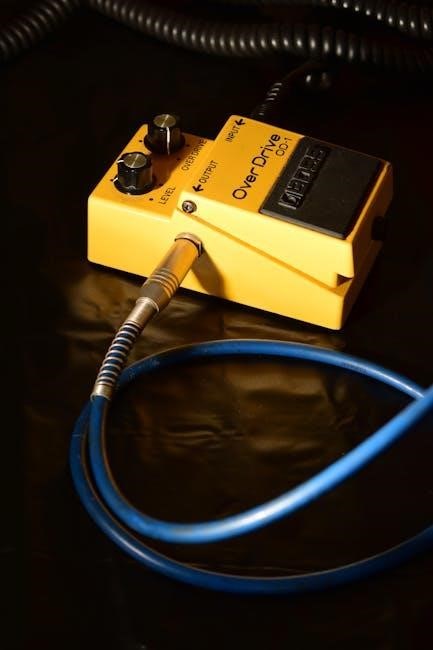
The DD-20 expertly recreates classic delay types. The Standard digital mode delivers pristine, clear repeats – a blank canvas for shaping your sound, similar to starting with basic materials at Hobby Lobby. Tape mode introduces warmth and subtle modulation, emulating vintage tape echo units, adding character and a slightly degraded, organic feel.
Analog mode captures the rich, saturated tone of classic analog delay pedals, offering a darker, more textured sound. Each mode features adjustable parameters like time, feedback, and level, allowing for precise control. Experimenting with these modes unlocks a wide range of sonic possibilities, from subtle ambience to dramatic, swirling echoes. These diverse options empower you to craft unique delay textures.
Cosmos Delay: Exploring the Unique Soundscapes
The DD-20’s Cosmos delay is a realm of otherworldly sound design. This innovative mode utilizes Boss’s advanced algorithms to generate complex, evolving delays unlike anything found in traditional delay pedals. Think of it as a limitless supply of creative tools, much like Hobby Lobby’s project materials.
Cosmos offers several distinct variations, including shimmer, hall, and granular delays, each with its own unique character. Parameters like wave shape, scatter, and filter allow you to sculpt the delay’s texture and movement. Explore ethereal soundscapes, glitchy textures, and ambient washes. It’s perfect for adding depth, atmosphere, and experimental effects to your playing.
DD-20 Hardware and Interface
The Boss DD-20 Giga Delay boasts a robust metal chassis, built for the rigors of stage and studio use – a durable foundation, similar to the quality found in Hobby Lobby’s home décor. Its intuitive interface features a large, high-contrast LCD display for easy parameter visibility. Multiple footswitches enable hands-free control of presets, bypass, and tap tempo.
The pedal’s layout is logically organized, with dedicated knobs for core delay parameters. A prominent expression pedal input allows for real-time control over various functions. The DD-20’s design prioritizes accessibility and ease of use, ensuring a seamless workflow for both beginners and experienced delay users; It’s creatively designed for optimal performance.
Input/Output Connections and Signal Flow
The Boss DD-20 Giga Delay features standard ¼-inch input and output jacks, facilitating seamless integration into any guitar or bass rig – much like connecting project supplies from Hobby Lobby. A dedicated stereo output allows for expansive, immersive delay textures. The pedal supports both mono and stereo operation, offering flexibility for diverse setups.
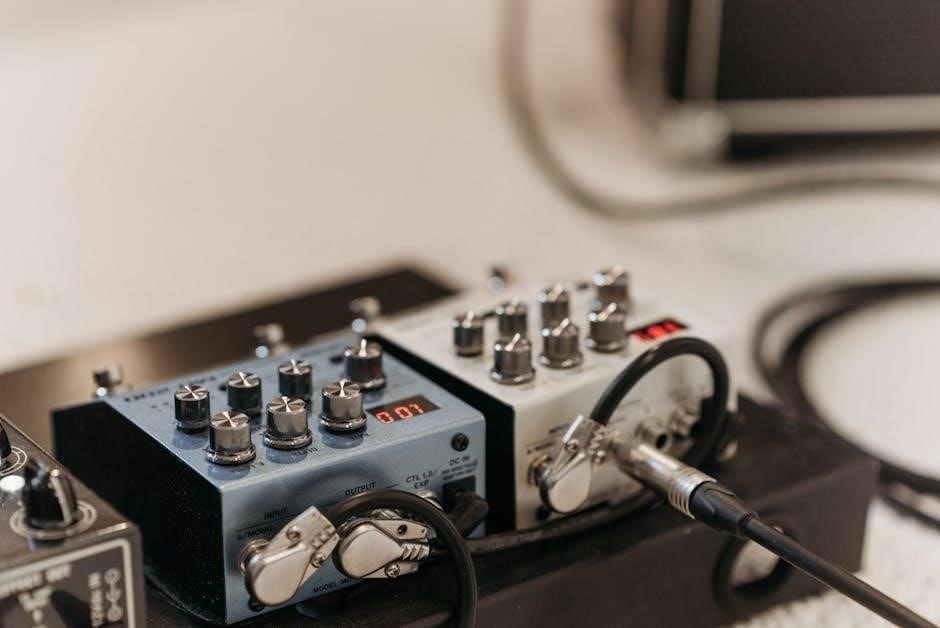
Signal flow is straightforward: instrument input, delay processing, and stereo outputs. An external expression pedal jack enables dynamic control over delay parameters. The DD-20 maintains a high signal-to-noise ratio, preserving the integrity of your tone. Careful attention to signal routing ensures optimal performance and minimizes unwanted noise, delivering a polished sound.
Control Knobs, Buttons, and Display Functions
The DD-20’s intuitive interface features dedicated knobs for Delay Time, Feedback, Level, and Modulation. These provide immediate access to core delay parameters, akin to selecting yarn colors at Hobby Lobby. Multiple buttons navigate through delay modes, preset selection, and editing functions. A prominent LCD display clearly presents parameter values and preset names.
The display also visualizes waveform characteristics, offering a visual representation of the delay effect. Dedicated buttons allow for tap tempo input and preset saving/recall. The pedal’s layout is designed for efficient, real-time control during performance. Understanding these controls unlocks the full potential of the DD-20’s sonic palette.
Power Supply and Pedal Operation
The Boss DD-20 Giga Delay operates on a 9V DC power supply (center negative), ensuring stable performance, much like reliable power for crafting projects. It’s recommended to use the Boss PSA-120 power adapter for optimal operation. The pedal also accepts battery power (6 x AA alkaline batteries), offering portability for on-the-go creativity.
To activate the pedal, simply press the footswitch. The LED indicator illuminates to confirm engagement. The DD-20 features true bypass operation, preserving your signal’s integrity when the effect is disengaged. Proper power connection is crucial for avoiding noise or operational issues. Always disconnect the power supply before opening the pedal for maintenance.
Delay Parameter Control – A Deep Dive
The DD-20’s core lies in its precise parameter control, allowing for nuanced sound shaping, similar to carefully selecting materials for a detailed craft. Delay Time dictates the interval between repetitions, adjustable via the knob or tap tempo. Feedback controls the number of repeats, ranging from subtle echoes to self-oscillating chaos. Level adjusts the volume of the delayed signal relative to the dry signal.
Further refinement comes from the Modulation section, influencing the delay’s character. Experiment with Depth and Rate to introduce chorus, flanger, or vibrato effects. The EQ section allows tonal sculpting, ensuring the delay complements your overall sound. Mastering these parameters unlocks the DD-20’s full potential.
Delay Time, Feedback, and Level Adjustments
Precisely adjusting Delay Time, Feedback, and Level is fundamental to harnessing the DD-20’s power, akin to meticulously arranging elements in a creative project. Delay Time, measured in milliseconds or beats, establishes the rhythmic spacing of echoes. Shorter times create slapback effects, while longer times generate spacious ambience.
Feedback governs the decay of the repeats. Lower settings produce a few distinct echoes, while higher settings build into sustained, swirling textures. Level balances the delayed signal’s volume against the original, preventing muddiness or overpowering the dry signal. Careful interplay between these three parameters unlocks a vast sonic palette.
Modulation Effects: Depth and Rate Control
The DD-20’s modulation capabilities add dynamic movement to your delay sounds, similar to incorporating varied textures into a craft project. Depth controls the intensity of the modulation effect – subtle phasing to dramatic chorus-like swirls. Lower depths offer nuanced movement, while higher depths create pronounced, animated textures.
Rate determines the speed of the modulation. Slower rates produce gentle, undulating effects, while faster rates generate vibrant, pulsating sounds. Experimenting with Depth and Rate in tandem unlocks a wide range of expressive possibilities. These controls breathe life into static delays, creating evolving soundscapes.
EQ and Tone Shaping for Delay Sounds
The DD-20 provides powerful EQ tools to sculpt the tonal character of your delays, akin to carefully selecting colors for a vibrant home décor project. High and Low EQ controls allow you to brighten or darken the delayed signal, preventing muddiness or harshness. Boosting the highs can add clarity and sparkle, while attenuating them softens the sound.
Conversely, enhancing the lows adds warmth and body, while reducing them cleans up the low-end. These EQ adjustments are crucial for integrating delays seamlessly into your mix. Experiment with subtle EQ changes to find the sweet spot for each delay mode and desired sonic texture, ensuring a polished and professional sound.
Preset Management and Memory
The DD-20 boasts extensive preset capabilities, allowing you to store and recall your favorite delay settings with ease – much like organizing crafting supplies for future projects. Ninety-nine preset locations are available for storing unique delay sounds, categorized into two banks (A and B) of forty-nine presets plus one write/protect preset.
Saving a preset is straightforward: simply adjust the delay parameters to your liking and press the ‘Write’ button. Preset names can be customized for quick identification, aiding in efficient recall during live performance or studio sessions. Effective preset organization is key to maximizing the DD-20’s potential, ensuring your desired sounds are always at your fingertips.
Saving and Recalling Presets
The DD-20 simplifies preset storage and retrieval, mirroring the ease of selecting materials for a hobby project. To save a preset, sculpt your desired delay sound using the control knobs, then press and hold the ‘Write’ button. The display will prompt you to select a preset location (1-49 in banks A & B). Confirm your choice, and the current settings are saved.
Recalling presets is equally intuitive: use the Up/Down arrow buttons to navigate through the preset numbers, or directly enter a number using the numeric keypad. Pressing the preset number button instantly loads the corresponding settings. This streamlined process allows for quick changes during performance, similar to switching between crafting techniques.
Preset Organization and Naming Conventions
Effective preset management is crucial for maximizing the DD-20’s potential, akin to organizing craft supplies for efficient project completion. The DD-20 allows for preset naming, enabling you to assign descriptive labels to each sound. Access the naming function through the menu system, utilizing the character input to create recognizable names – for example, “Subtle Tape Echo” or “Ambient Cosmos Pad”.
Consider a logical organization system. Group presets by musical genre, delay type (digital, analog, cosmos), or intended application (lead lines, rhythm textures). Utilizing banks A & B strategically, dedicate one bank to live performance presets and the other to studio experimentation. Consistent naming and organization will dramatically improve your workflow.
Using the DD-20’s Memory Banks Effectively
The DD-20’s memory banks are your sonic palette, much like a crafter’s collection of materials. With 99 user presets available, strategic allocation is key. Bank selection is performed via the panel buttons, allowing quick access to different soundscapes. Prioritize frequently used sounds in easily accessible banks for live performance.
Experiment with layering presets across banks. For example, create a base delay in Bank A and a modulated variation in Bank B, switching between them for dynamic textures. Regularly back up your presets to avoid data loss. Think of banks as project folders – organize by song, genre, or specific tonal goals for optimal recall and creative flow.
Advanced Features and Routing Options
The DD-20 excels with its flexible routing capabilities, akin to choosing the right tools for a detailed craft project. Dual delay configurations allow for layering two distinct delay lines – experiment with serial or parallel modes for varied textures. Serial routing chains delays for complex echoes, while parallel blends them for a wider stereo image.
External loop functionality enables integration with other effects, expanding sonic possibilities. Utilize the expression pedal input for real-time control over delay parameters, adding dynamic sweeps and rhythmic modulation. Explore MIDI implementation for seamless integration with your rig, allowing for preset changes and parameter adjustments from external controllers.
Dual Delay Configurations and Serial/Parallel Modes
The DD-20’s dual delay engine unlocks immense creative potential, similar to combining different art supplies for unique projects. Serial mode chains the two delay lines, where the output of the first delay feeds into the second, creating cascading, complex echoes. This is ideal for spacious, evolving soundscapes.
Parallel mode runs both delay lines simultaneously, blending their outputs. This results in a richer, wider stereo image, perfect for thickening sounds without losing clarity. Experiment with contrasting delay times and modulation settings in each line for captivating textures. Independent control over each delay’s parameters allows for intricate sound design.
External Expression Pedal Control
The DD-20 offers extensive expression pedal control, enabling dynamic manipulation of delay parameters in real-time – akin to a painter adjusting brushstrokes. Connect a compatible expression pedal to the EXP1 or EXP2 jack to assign control over various parameters, including delay time, feedback, modulation depth, and more.
Pedal assignments are customizable within the DD-20’s menu. You can select a specific parameter for each pedal, tailoring the control to your performance needs. This allows for expressive swells, rhythmic gating effects, and evolving soundscapes. Experiment with different pedal ranges and curves to achieve the desired responsiveness, much like selecting the right tools for a craft project.
MIDI Implementation and Control
The DD-20 boasts robust MIDI implementation, facilitating seamless integration into complex setups – similar to coordinating elements for a large party. Via the MIDI IN and MIDI OUT ports, the DD-20 can receive and transmit MIDI messages, enabling control from external sequencers, DAWs, and other MIDI devices.
Control Change (CC) messages allow for remote parameter adjustments, while Program Change messages enable preset switching. MIDI clock synchronization ensures tight timing with your overall system. The DD-20 can also act as a MIDI thru device, passing messages to other gear. Detailed MIDI implementation charts are available within the unit’s menu and online resources, offering precise control mapping for creative flexibility.
Troubleshooting Common Issues
Encountering issues? Like finding the right supplies for a craft, sometimes adjustments are needed. Noise or signal problems can often be traced to cable connections or power supply issues – ensure everything is securely connected. Unexpected sounds might indicate incorrect parameter settings; double-check your delay time, feedback, and level.
Preset loading errors can usually be resolved by restarting the pedal or restoring factory settings. If the display freezes, a power cycle is recommended. Refer to the DD-20’s manual for detailed troubleshooting steps and contact Boss customer support if problems persist. Maintaining proper grounding and using quality cables can prevent many common issues.
Addressing Noise and Signal Problems
Experiencing unwanted noise? Similar to ensuring a clean workspace for crafting, a clear signal path is crucial. First, check all cable connections – loose or damaged cables are frequent culprits. Ground loops can introduce hum; try a different power outlet or a ground lift adapter (use with caution!).
High gain settings can amplify noise, so adjust levels carefully. Ensure proper impedance matching between the DD-20 and other pedals or your amplifier. Experiment with different cable types; shielded cables offer better noise rejection. If the problem persists, isolate the DD-20 in your signal chain to determine if it’s the source of the noise.
Resolving Preset Loading Errors
Encountering issues loading presets? Like carefully organizing craft supplies, proper memory management is key; First, verify sufficient memory is available – a full memory bank prevents saving new presets. Corrupted presets can cause errors; try reloading factory presets as a baseline.
Power interruptions during saving can lead to data loss. Ensure a stable power supply during preset operations. If a preset consistently fails to load, attempt to rewrite it. Consider a factory reset (as a last resort) to clear all user data and restore default settings. Regularly back up your presets to avoid permanent loss.
Firmware Updates and Maintenance
Maintaining your DD-20’s firmware is crucial for optimal performance, similar to keeping tools in good working order. Regularly check the Boss website for available updates, addressing bugs and adding new features. Download updates via USB, following the instructions carefully to avoid interruption.
Back up your presets before updating – a precaution against unforeseen issues. Keep the pedal clean, using a soft, dry cloth to remove dust and debris. Avoid extreme temperatures and humidity, which can affect electronic components. Proper storage when not in use extends the pedal’s lifespan, ensuring years of reliable delay effects.