true luna book 1 read online free pdf

Article Plan: True Luna Book 1 Read Online Free PDF

This article explores options for accessing Tessa Lilly’s True Luna: Rejected By My Mate, covering online reading, PDF availability, purchasing via Amazon, and related considerations.

True Luna: Rejected By My Mate, the inaugural installment in Tessa Lilly’s captivating White Wolf Series, has rapidly gained traction within the paranormal romance genre. The story centers around a heroine facing the devastating experience of mate rejection – a pivotal event in the werewolf world. This initial volume immediately plunges readers into a realm of complex relationships, supernatural powers, and intense emotional turmoil.

The widespread interest in this novel has naturally led many readers to seek avenues for accessing it conveniently, including exploring options to read True Luna online free or download it in PDF format. This article will delve into the various methods available, weighing the benefits and risks associated with each approach, and guiding readers towards legitimate and safe access points.

Understanding the Paranormal Romance Genre

Paranormal romance is a hugely popular subgenre blending the passionate intensity of romance with elements of the supernatural – werewolves, vampires, witches, and more. It often features heightened stakes, powerful characters, and explorations of fate and destiny. The appeal lies in escapism, offering readers thrilling worlds and emotionally charged connections beyond the mundane.

True Luna: Rejected By My Mate firmly plants itself within this genre, capitalizing on established tropes like fated mates and alpha/omega dynamics. The desire to read True Luna online free stems from the genre’s broad fanbase, eager to consume content quickly. Understanding the genre’s conventions helps appreciate the novel’s nuances and why it resonates with so many seeking a captivating paranormal love story.

The Author: Tessa Lilly ౼ A Brief Overview

Tessa Lilly is a rising star in the paranormal romance world, quickly gaining recognition for her White Wolf Series, beginning with True Luna: Rejected By My Mate. While detailed biographical information is somewhat limited, her focus clearly lies on crafting immersive and emotionally resonant stories within the werewolf romance niche.

Lilly’s success is fueled by a dedicated online readership, many of whom actively seek ways to read True Luna online free or find affordable eBook options. Her work consistently appears on Amazon’s paranormal romance bestseller lists, demonstrating a strong connection with her audience. The demand for accessible reading options highlights her growing popularity and the series’ appeal.

Core Themes of True Luna Book 1

True Luna: Rejected By My Mate delves into several compelling themes central to the paranormal romance genre. Mate rejection and its devastating consequences form a core narrative element, exploring themes of heartbreak, self-worth, and resilience. The intricate lore of the White Wolf Series establishes a complex world with established power structures and ancient traditions.

Power dynamics within the wolf pack are also prominent, examining themes of leadership, loyalty, and the challenges faced by those who don’t fit traditional roles. Readers seeking to read True Luna online free are often drawn to these emotionally charged themes, fueling the book’s popularity and online discussion.

Mate Rejection and its Consequences

Mate rejection in True Luna: Rejected By My Mate isn’t merely a romantic setback; it’s a deeply traumatic event with far-reaching consequences. For werewolves, the mate bond is fundamental, and rejection can lead to immense physical and emotional pain, weakening their very essence.

The protagonist faces not only heartbreak but also societal ostracism and potential loss of status within the pack. Readers exploring options to read True Luna online free are captivated by the raw emotional fallout and the protagonist’s struggle to rebuild her life after such a profound rejection. This theme resonates deeply within the paranormal romance community.

The White Wolf Series Lore

True Luna: Rejected By My Mate establishes the foundational lore for Tessa Lilly’s White Wolf Series, a world steeped in ancient werewolf traditions and complex pack dynamics. The series delves into the hierarchy, powers, and history of various werewolf clans, introducing readers to a rich tapestry of supernatural elements.

Those seeking to read True Luna online free will quickly discover the importance of lineage and the significance of the ‘White Wolf’ bloodline. Understanding this lore is crucial to appreciating the intricate plot and the characters’ motivations. The series promises a deeper exploration of this world, making the initial installment a compelling starting point.

Power Dynamics within the Wolf Pack

True Luna: Rejected By My Mate heavily emphasizes the rigid power structures inherent within werewolf packs. The Alpha’s authority is absolute, dictating the lives of all pack members, while the Beta serves as a crucial enforcer and advisor. Readers exploring options to read True Luna online free will witness how these dynamics shape character interactions and drive the narrative;

The protagonist’s experience with mate rejection throws these established hierarchies into disarray, challenging the traditional roles and sparking conflict. Understanding these power plays is essential for anyone seeking a comprehensive understanding of the story’s complexities, even when accessing it through free online sources or considering a PDF version.

Plot Summary: A Detailed Synopsis

True Luna: Rejected By My Mate centers around Lyra, a young woman ostracized after being rejected by her intended mate, the Alpha’s son. This rejection, a severe breach of werewolf law, casts her out, forcing her to navigate a dangerous world alone. Those seeking to read True Luna online free will discover Lyra’s journey of self-discovery and resilience.

The narrative unfolds as Lyra uncovers hidden truths about her lineage and latent powers, attracting the attention of powerful figures. Whether exploring free online chapters or considering a PDF download, readers will follow her struggle for acceptance and the unraveling of a conspiracy that threatens the entire pack.

Main Characters and Their Roles

Lyra, the protagonist, is central to the story, experiencing rejection and discovering her inner strength – a key element for those seeking to read True Luna online free. Her journey resonates with themes of resilience and self-worth. Kael, the Alpha male, embodies complexity, initially appearing cold but harboring hidden depths.

Supporting characters, like Lyra’s loyal friends and the manipulative figures within the pack, significantly influence the plot. Readers following the story, even through PDF versions, will find these characters crucial to understanding the power dynamics. Their roles shape Lyra’s path and the unfolding mysteries within the White Wolf series.

The Protagonist: Her Journey and Struggles

Lyra’s narrative in True Luna: Rejected By My Mate is one of profound hardship and eventual empowerment. Initially, she faces brutal rejection by her intended mate, a devastating blow within the werewolf societal structure. This sets her on a path of self-discovery, forcing her to confront prejudice and unlock hidden abilities.

For readers seeking to read True Luna online free or via PDF, understanding Lyra’s emotional turmoil is vital. Her struggles aren’t merely romantic; they represent a fight against systemic oppression and a quest for acceptance. She must navigate betrayal, uncover secrets, and ultimately define her own destiny, captivating those following her story.

The Alpha Male: Complexity and Character Arc

Kael, the Alpha in True Luna: Rejected By My Mate, is far from a typical domineering figure. While possessing the expected strength and authority, his character is layered with internal conflict and a troubled past. His initial rejection of Lyra isn’t simply cruelty, but stems from deeply rooted reasons that unfold throughout the narrative.

For those exploring options to read True Luna online free or searching for a PDF version, understanding Kael’s arc is crucial. He undergoes significant transformation, grappling with duty, desire, and the consequences of his decisions. His journey parallels Lyra’s, adding depth and intrigue to the story’s central romance.

Supporting Characters and Their Significance

Beyond Lyra and Kael, True Luna: Rejected By My Mate boasts a rich cast of supporting characters who significantly impact the plot. These individuals aren’t merely background figures; they possess their own motivations and play vital roles in shaping the central conflict. Whether allies or adversaries, they contribute to the complex dynamics within the White Wolf pack.

For readers seeking to read True Luna online free or considering a PDF download, recognizing these characters enhances the reading experience. They provide crucial context, offer alternative perspectives, and often drive the narrative forward, enriching the world Tessa Lilly has created.

Where to Find True Luna Book 1 Online

Readers eager to dive into True Luna: Rejected By My Mate have several online avenues available. While a completely free, legal read of the full novel is challenging to find, options exist. Amazon.com is a primary source, offering the Kindle edition for purchase. Numerous websites advertise access, but caution is advised regarding legality and security.

Searching for “True Luna book 1 read online free PDF” yields results, however, these often lead to unofficial sources. Exploring legitimate eBook retailers and subscription services is recommended. Always prioritize safe and legal reading methods to support the author and avoid potential malware risks.

Legality of Reading Online vs. Purchasing

Accessing True Luna: Rejected By My Mate online presents a legal gray area. While searching for a “True Luna book 1 read online free PDF” may seem convenient, many sources offer unauthorized copies, constituting copyright infringement. Purchasing the eBook through legitimate platforms like Amazon.com directly supports author Tessa Lilly and ensures a legal reading experience.

Downloading from unofficial websites carries risks, including potential malware and legal repercussions for the reader. Supporting authors through legitimate purchases fosters continued creativity and quality content. Choosing to buy the book is ethically sound and guarantees access to the complete, unadulterated story.

Free Online Reading Options ౼ Risks and Considerations

Seeking a “True Luna book 1 read online free PDF” often leads to websites with questionable security. These platforms frequently host malware, viruses, and phishing scams, potentially compromising your device and personal information. Beyond security threats, the quality of these free copies is often poor, riddled with errors, and incomplete.

Furthermore, accessing copyrighted material without authorization is illegal and unethical. Supporting authors like Tessa Lilly through legitimate purchases ensures continued storytelling. Consider the risks – damaged devices, stolen data, and undermining the creative process – before opting for free, unofficial online reading options. Prioritize safety and legality.

PDF Availability and Potential Security Concerns

The search for a “True Luna book 1 read online free PDF” frequently yields downloadable PDF files from unofficial sources. While seemingly convenient, these PDFs pose significant security risks. They are notorious for harboring malware, viruses, and spyware, capable of infecting your computer or mobile device upon download and opening.

These malicious files can steal personal data, compromise your online accounts, and even lead to identity theft. Even seemingly harmless PDFs can contain hidden trackers monitoring your activity. Always exercise extreme caution when downloading PDFs from unknown websites; legitimate sources like official retailers are far safer.

Kindle Edition: Benefits and Accessibility

Opting for the Kindle edition of True Luna: Rejected By My Mate offers a secure and convenient reading experience. Available on Amazon.com, the Kindle version eliminates the risks associated with free PDF downloads from untrusted sources, safeguarding your device from potential malware and viruses.

Kindle’s built-in features enhance readability with adjustable font sizes, brightness, and background colors. Accessibility is a key benefit, allowing readers to enjoy the book on various devices – Kindle e-readers, tablets, smartphones, and computers – via the free Kindle app. Purchasing the Kindle edition directly supports the author, Tessa Lilly, and ensures you receive the complete, unaltered novel.

Amazon.com as a Primary Source

Amazon.com stands as the most reliable and legitimate platform to purchase True Luna: Rejected By My Mate in digital format. As the primary retailer for Tessa Lilly’s work, it guarantees an authentic copy, free from the editing errors or malicious software often found with unauthorized online versions.

The Kindle edition is readily available, offering instant access upon purchase. Amazon’s secure payment system protects your financial information, and its customer support provides assistance if needed. Supporting the author through official channels like Amazon ensures the continuation of the White Wolf Series. Avoid questionable websites offering “free” downloads; Amazon provides a safe and ethical reading experience.

Alternative Platforms for Purchasing the eBook

Beyond Amazon.com, several alternative platforms offer the eBook version of True Luna: Rejected By My Mate for purchase. Kobo, Barnes & Noble’s Nook store, and Google Play Books are viable options, providing compatibility with various e-readers and devices.

These platforms often run promotions and offer competitive pricing, potentially providing savings compared to Amazon. However, verifying the seller’s legitimacy is crucial to avoid pirated or corrupted files. Each platform offers its own reading app and ecosystem, so consider your preferred reading experience. While Amazon remains the most direct source, these alternatives expand accessibility for readers using different devices and platforms.

Reader Reviews and Ratings: A Sentiment Analysis

Analyzing reader reviews reveals a generally positive reception for True Luna: Rejected By My Mate, with consistent praise for Tessa Lilly’s engaging writing style and captivating paranormal romance elements. Common themes in reviews highlight the compelling characters, particularly the complex dynamics between the protagonist and the alpha male.

Many readers appreciate the fast-paced plot and the immersive world-building within the White Wolf Series. However, some critiques mention predictable tropes common to the genre. Overall, the sentiment leans towards enthusiastic recommendation, especially for fans of fated mates and werewolf romance. Ratings consistently average between 4 and 5 stars across major platforms, indicating high reader satisfaction.

Common Tropes in True Luna and the Genre

True Luna: Rejected By My Mate skillfully employs several popular tropes within the paranormal romance genre, enhancing its appeal to dedicated fans. The “fated mates” and “soul bond” concept is central, driving the narrative and emotional connection between characters. Alpha/Omega dynamics are also prominent, showcasing power imbalances and inherent attraction within the wolf pack hierarchy.

Mate rejection, a key plot point, adds significant conflict and emotional depth. Readers frequently encounter themes of forbidden love, self-discovery, and overcoming adversity. These tropes, while familiar, are executed with a fresh perspective, contributing to the book’s overall enjoyment and resonating with the target audience.

Fated Mates and Soul Bonds

The concept of fated mates is a cornerstone of True Luna: Rejected By My Mate, deeply influencing the protagonist’s journey. This trope suggests an undeniable, preordained connection between two individuals, often marked by intense attraction and a sense of completion. Soul bonds amplify this connection, implying a spiritual and emotional intertwining that transcends physical attraction.

Within the narrative, the rejection of this fated mate creates significant conflict, challenging the established order and forcing characters to confront their destinies. The exploration of this bond’s power, even in the face of adversity, is central to the story’s emotional core and drives the plot forward.

Alpha/Omega Dynamics

True Luna: Rejected By My Mate heavily features the Alpha/Omega dynamic, a common element within werewolf romance. Alphas represent power, leadership, and strength, while Omegas are often portrayed as nurturing, sensitive, and possessing unique abilities. This hierarchy dictates social structures within the wolf pack, influencing relationships and power struggles.

The protagonist’s position within this dynamic is crucial, particularly given the rejection by her mate, who is an Alpha. This rejection disrupts the natural order, creating tension and forcing her to navigate a complex social landscape. The novel explores the challenges and complexities inherent in these roles, adding depth to the world-building.

Similar Books and Series for Fans of True Luna

Readers captivated by True Luna: Rejected By My Mate often enjoy other paranormal romance series with strong werewolf themes. Consider exploring the Psy-Changeling series by Nalini Singh, known for its complex world-building and compelling characters. Another excellent choice is Bitten by Kelley Armstrong, a gritty and realistic take on werewolf lore.

For those seeking fated mate tropes, the Kate Daniels series by Ilona Andrews delivers action and romance. If you appreciate Tessa Lilly’s writing style, look into authors like Jennifer L. Armentrout and Laurell K. Hamilton. These series offer similar levels of intrigue, passion, and supernatural elements.

The Popularity of Werewolf Romance

Werewolf romance has experienced a significant surge in popularity, becoming a dominant subgenre within paranormal romance. This enduring appeal stems from the captivating blend of primal instincts, forbidden desires, and the allure of transformation. The trope of the alpha male and the strong-willed female resonates deeply with readers seeking power dynamics and passionate connections.

Stories like True Luna: Rejected By My Mate tap into archetypal themes of belonging, rejection, and self-discovery. The inherent drama of shifting identities and pack hierarchies provides fertile ground for compelling narratives. This genre’s success is also fueled by active online communities and fan fiction, fostering a dedicated readership.

Fan Fiction and Online Communities

The world of True Luna: Rejected By My Mate extends far beyond the published pages, thriving within vibrant online communities and fan fiction platforms. Readers actively engage with the story, creating their own continuations, alternate universes, and character explorations. These platforms, like Archive of Our Own and FanFiction.net, offer spaces for creative expression and shared passion.

Online forums and social media groups dedicated to the White Wolf Series provide opportunities for discussion, analysis, and connection among fans. This collaborative environment enhances the reading experience, fostering a sense of belonging and shared enthusiasm. The accessibility of online platforms contributes to the genre’s widespread appeal.

Future Books in the White Wolf Series

Readers captivated by True Luna: Rejected By My Mate eagerly anticipate the continuation of the White Wolf Series. Tessa Lilly has established a complex world with intriguing characters, promising further exploration in subsequent installments. While specific release dates are subject to change, information regarding upcoming books is typically shared through the author’s website and social media channels.

The series’ ongoing development suggests deeper dives into the lore, expanding upon the power dynamics within the wolf packs and the intricacies of mate bonds. Fans actively speculate about character arcs and potential plot twists, fueling excitement for future releases. Staying connected with the author’s updates is key to remaining informed about the series’ progression.

Why True Luna Captivates Readers

True Luna: Rejected By My Mate resonates with readers due to its compelling blend of paranormal romance tropes and emotional depth. The story’s exploration of rejection, self-discovery, and the search for belonging strikes a chord with a wide audience. Tessa Lilly’s skillful storytelling creates a captivating narrative filled with suspense, passion, and intriguing characters.

The allure of the werewolf shifter world, coupled with the complexities of fated mates, provides a rich and immersive reading experience. Whether accessed through legitimate purchase or explored via online options, the story’s impact remains consistent. Ultimately, True Luna’s success lies in its ability to transport readers to a world of magic and emotion.

boss dd 20 giga delay manual

Boss DD-20 Giga Delay: A Comprehensive Manual Overview (as of 04/14/2026)

Today, April 14th, 2026, this manual details the Boss DD-20 Giga Delay, offering comprehensive guidance for crafting diverse sounds, much like selecting supplies for creative projects.

Welcome to the world of expansive sonic textures! The Boss DD-20 Giga Delay isn’t merely a delay pedal; it’s a versatile sound design tool, akin to a crafter’s selection of diverse materials. This pedal empowers musicians to sculpt immersive atmospheres and rhythmic complexities, offering a palette of twelve distinct delay modes.

From pristine digital repeats to warm analog echoes and the innovative Cosmos delay, the DD-20 caters to a broad spectrum of sonic preferences. Like choosing the right yarn for a project, selecting the appropriate delay mode is crucial. This manual serves as your guide, detailing each parameter and function to unlock the full potential of this powerful pedal. Explore preset management, advanced routing, and external control options – all designed to inspire creativity and elevate your performances.

Understanding the DD-20’s Core Delay Technologies

The DD-20’s strength lies in its diverse delay engines. Much like Hobby Lobby offers varied craft supplies, the DD-20 presents a spectrum of delay characteristics. At its heart are meticulously modeled digital, tape, and analog delay circuits, each offering a unique sonic fingerprint. Digital delays provide pristine clarity and precise timing, ideal for clean repeats and rhythmic patterns.

Tape delay emulates the warmth and subtle imperfections of vintage tape machines, adding character and depth. Analog delay delivers a rich, organic tone with natural saturation. Beyond these core technologies, the DD-20 introduces Cosmos, a revolutionary delay algorithm creating ethereal and otherworldly soundscapes. Understanding these technologies is key to harnessing the DD-20’s full creative potential.

Digital Delay Modes: Standard, Tape, and Analog

The DD-20 expertly recreates classic delay types. The Standard digital mode delivers pristine, clear repeats – a blank canvas for shaping your sound, similar to starting with basic materials at Hobby Lobby. Tape mode introduces warmth and subtle modulation, emulating vintage tape echo units, adding character and a slightly degraded, organic feel.

Analog mode captures the rich, saturated tone of classic analog delay pedals, offering a darker, more textured sound. Each mode features adjustable parameters like time, feedback, and level, allowing for precise control. Experimenting with these modes unlocks a wide range of sonic possibilities, from subtle ambience to dramatic, swirling echoes. These diverse options empower you to craft unique delay textures.

Cosmos Delay: Exploring the Unique Soundscapes

The DD-20’s Cosmos delay is a realm of otherworldly sound design. This innovative mode utilizes Boss’s advanced algorithms to generate complex, evolving delays unlike anything found in traditional delay pedals. Think of it as a limitless supply of creative tools, much like Hobby Lobby’s project materials.

Cosmos offers several distinct variations, including shimmer, hall, and granular delays, each with its own unique character. Parameters like wave shape, scatter, and filter allow you to sculpt the delay’s texture and movement. Explore ethereal soundscapes, glitchy textures, and ambient washes. It’s perfect for adding depth, atmosphere, and experimental effects to your playing.

DD-20 Hardware and Interface

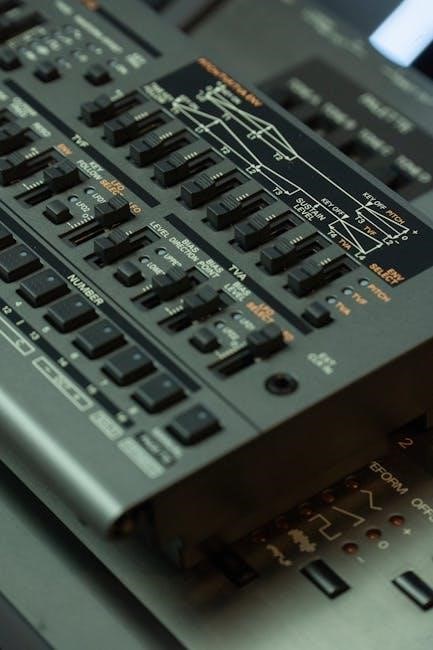
The Boss DD-20 Giga Delay boasts a robust metal chassis, built for the rigors of stage and studio use – a durable foundation, similar to the quality found in Hobby Lobby’s home décor. Its intuitive interface features a large, high-contrast LCD display for easy parameter visibility. Multiple footswitches enable hands-free control of presets, bypass, and tap tempo.

The pedal’s layout is logically organized, with dedicated knobs for core delay parameters. A prominent expression pedal input allows for real-time control over various functions. The DD-20’s design prioritizes accessibility and ease of use, ensuring a seamless workflow for both beginners and experienced delay users; It’s creatively designed for optimal performance.

Input/Output Connections and Signal Flow

The Boss DD-20 Giga Delay features standard ¼-inch input and output jacks, facilitating seamless integration into any guitar or bass rig – much like connecting project supplies from Hobby Lobby. A dedicated stereo output allows for expansive, immersive delay textures. The pedal supports both mono and stereo operation, offering flexibility for diverse setups.

Signal flow is straightforward: instrument input, delay processing, and stereo outputs. An external expression pedal jack enables dynamic control over delay parameters. The DD-20 maintains a high signal-to-noise ratio, preserving the integrity of your tone. Careful attention to signal routing ensures optimal performance and minimizes unwanted noise, delivering a polished sound.

Control Knobs, Buttons, and Display Functions

The DD-20’s intuitive interface features dedicated knobs for Delay Time, Feedback, Level, and Modulation. These provide immediate access to core delay parameters, akin to selecting yarn colors at Hobby Lobby. Multiple buttons navigate through delay modes, preset selection, and editing functions. A prominent LCD display clearly presents parameter values and preset names.

The display also visualizes waveform characteristics, offering a visual representation of the delay effect. Dedicated buttons allow for tap tempo input and preset saving/recall. The pedal’s layout is designed for efficient, real-time control during performance. Understanding these controls unlocks the full potential of the DD-20’s sonic palette.

Power Supply and Pedal Operation

The Boss DD-20 Giga Delay operates on a 9V DC power supply (center negative), ensuring stable performance, much like reliable power for crafting projects. It’s recommended to use the Boss PSA-120 power adapter for optimal operation. The pedal also accepts battery power (6 x AA alkaline batteries), offering portability for on-the-go creativity.

To activate the pedal, simply press the footswitch. The LED indicator illuminates to confirm engagement. The DD-20 features true bypass operation, preserving your signal’s integrity when the effect is disengaged. Proper power connection is crucial for avoiding noise or operational issues. Always disconnect the power supply before opening the pedal for maintenance.

Delay Parameter Control – A Deep Dive

The DD-20’s core lies in its precise parameter control, allowing for nuanced sound shaping, similar to carefully selecting materials for a detailed craft. Delay Time dictates the interval between repetitions, adjustable via the knob or tap tempo. Feedback controls the number of repeats, ranging from subtle echoes to self-oscillating chaos. Level adjusts the volume of the delayed signal relative to the dry signal.

Further refinement comes from the Modulation section, influencing the delay’s character. Experiment with Depth and Rate to introduce chorus, flanger, or vibrato effects. The EQ section allows tonal sculpting, ensuring the delay complements your overall sound. Mastering these parameters unlocks the DD-20’s full potential.

Delay Time, Feedback, and Level Adjustments

Precisely adjusting Delay Time, Feedback, and Level is fundamental to harnessing the DD-20’s power, akin to meticulously arranging elements in a creative project. Delay Time, measured in milliseconds or beats, establishes the rhythmic spacing of echoes. Shorter times create slapback effects, while longer times generate spacious ambience.

Feedback governs the decay of the repeats. Lower settings produce a few distinct echoes, while higher settings build into sustained, swirling textures. Level balances the delayed signal’s volume against the original, preventing muddiness or overpowering the dry signal. Careful interplay between these three parameters unlocks a vast sonic palette.

Modulation Effects: Depth and Rate Control

The DD-20’s modulation capabilities add dynamic movement to your delay sounds, similar to incorporating varied textures into a craft project. Depth controls the intensity of the modulation effect – subtle phasing to dramatic chorus-like swirls. Lower depths offer nuanced movement, while higher depths create pronounced, animated textures.

Rate determines the speed of the modulation. Slower rates produce gentle, undulating effects, while faster rates generate vibrant, pulsating sounds. Experimenting with Depth and Rate in tandem unlocks a wide range of expressive possibilities. These controls breathe life into static delays, creating evolving soundscapes.

EQ and Tone Shaping for Delay Sounds

The DD-20 provides powerful EQ tools to sculpt the tonal character of your delays, akin to carefully selecting colors for a vibrant home décor project. High and Low EQ controls allow you to brighten or darken the delayed signal, preventing muddiness or harshness. Boosting the highs can add clarity and sparkle, while attenuating them softens the sound.

Conversely, enhancing the lows adds warmth and body, while reducing them cleans up the low-end. These EQ adjustments are crucial for integrating delays seamlessly into your mix. Experiment with subtle EQ changes to find the sweet spot for each delay mode and desired sonic texture, ensuring a polished and professional sound.

Preset Management and Memory

The DD-20 boasts extensive preset capabilities, allowing you to store and recall your favorite delay settings with ease – much like organizing crafting supplies for future projects. Ninety-nine preset locations are available for storing unique delay sounds, categorized into two banks (A and B) of forty-nine presets plus one write/protect preset.

Saving a preset is straightforward: simply adjust the delay parameters to your liking and press the ‘Write’ button. Preset names can be customized for quick identification, aiding in efficient recall during live performance or studio sessions. Effective preset organization is key to maximizing the DD-20’s potential, ensuring your desired sounds are always at your fingertips.

Saving and Recalling Presets

The DD-20 simplifies preset storage and retrieval, mirroring the ease of selecting materials for a hobby project. To save a preset, sculpt your desired delay sound using the control knobs, then press and hold the ‘Write’ button. The display will prompt you to select a preset location (1-49 in banks A & B). Confirm your choice, and the current settings are saved.

Recalling presets is equally intuitive: use the Up/Down arrow buttons to navigate through the preset numbers, or directly enter a number using the numeric keypad. Pressing the preset number button instantly loads the corresponding settings. This streamlined process allows for quick changes during performance, similar to switching between crafting techniques.

Preset Organization and Naming Conventions

Effective preset management is crucial for maximizing the DD-20’s potential, akin to organizing craft supplies for efficient project completion. The DD-20 allows for preset naming, enabling you to assign descriptive labels to each sound. Access the naming function through the menu system, utilizing the character input to create recognizable names – for example, “Subtle Tape Echo” or “Ambient Cosmos Pad”.

Consider a logical organization system. Group presets by musical genre, delay type (digital, analog, cosmos), or intended application (lead lines, rhythm textures). Utilizing banks A & B strategically, dedicate one bank to live performance presets and the other to studio experimentation. Consistent naming and organization will dramatically improve your workflow.

Using the DD-20’s Memory Banks Effectively

The DD-20’s memory banks are your sonic palette, much like a crafter’s collection of materials. With 99 user presets available, strategic allocation is key. Bank selection is performed via the panel buttons, allowing quick access to different soundscapes. Prioritize frequently used sounds in easily accessible banks for live performance.

Experiment with layering presets across banks. For example, create a base delay in Bank A and a modulated variation in Bank B, switching between them for dynamic textures. Regularly back up your presets to avoid data loss. Think of banks as project folders – organize by song, genre, or specific tonal goals for optimal recall and creative flow.

Advanced Features and Routing Options

The DD-20 excels with its flexible routing capabilities, akin to choosing the right tools for a detailed craft project. Dual delay configurations allow for layering two distinct delay lines – experiment with serial or parallel modes for varied textures. Serial routing chains delays for complex echoes, while parallel blends them for a wider stereo image.

External loop functionality enables integration with other effects, expanding sonic possibilities. Utilize the expression pedal input for real-time control over delay parameters, adding dynamic sweeps and rhythmic modulation. Explore MIDI implementation for seamless integration with your rig, allowing for preset changes and parameter adjustments from external controllers.

Dual Delay Configurations and Serial/Parallel Modes

The DD-20’s dual delay engine unlocks immense creative potential, similar to combining different art supplies for unique projects. Serial mode chains the two delay lines, where the output of the first delay feeds into the second, creating cascading, complex echoes. This is ideal for spacious, evolving soundscapes.

Parallel mode runs both delay lines simultaneously, blending their outputs. This results in a richer, wider stereo image, perfect for thickening sounds without losing clarity. Experiment with contrasting delay times and modulation settings in each line for captivating textures. Independent control over each delay’s parameters allows for intricate sound design.

External Expression Pedal Control

The DD-20 offers extensive expression pedal control, enabling dynamic manipulation of delay parameters in real-time – akin to a painter adjusting brushstrokes. Connect a compatible expression pedal to the EXP1 or EXP2 jack to assign control over various parameters, including delay time, feedback, modulation depth, and more.

Pedal assignments are customizable within the DD-20’s menu. You can select a specific parameter for each pedal, tailoring the control to your performance needs. This allows for expressive swells, rhythmic gating effects, and evolving soundscapes. Experiment with different pedal ranges and curves to achieve the desired responsiveness, much like selecting the right tools for a craft project.

MIDI Implementation and Control

The DD-20 boasts robust MIDI implementation, facilitating seamless integration into complex setups – similar to coordinating elements for a large party. Via the MIDI IN and MIDI OUT ports, the DD-20 can receive and transmit MIDI messages, enabling control from external sequencers, DAWs, and other MIDI devices.

Control Change (CC) messages allow for remote parameter adjustments, while Program Change messages enable preset switching. MIDI clock synchronization ensures tight timing with your overall system. The DD-20 can also act as a MIDI thru device, passing messages to other gear. Detailed MIDI implementation charts are available within the unit’s menu and online resources, offering precise control mapping for creative flexibility.

Troubleshooting Common Issues

Encountering issues? Like finding the right supplies for a craft, sometimes adjustments are needed. Noise or signal problems can often be traced to cable connections or power supply issues – ensure everything is securely connected. Unexpected sounds might indicate incorrect parameter settings; double-check your delay time, feedback, and level.

Preset loading errors can usually be resolved by restarting the pedal or restoring factory settings. If the display freezes, a power cycle is recommended. Refer to the DD-20’s manual for detailed troubleshooting steps and contact Boss customer support if problems persist. Maintaining proper grounding and using quality cables can prevent many common issues.

Addressing Noise and Signal Problems

Experiencing unwanted noise? Similar to ensuring a clean workspace for crafting, a clear signal path is crucial. First, check all cable connections – loose or damaged cables are frequent culprits. Ground loops can introduce hum; try a different power outlet or a ground lift adapter (use with caution!).

High gain settings can amplify noise, so adjust levels carefully. Ensure proper impedance matching between the DD-20 and other pedals or your amplifier. Experiment with different cable types; shielded cables offer better noise rejection. If the problem persists, isolate the DD-20 in your signal chain to determine if it’s the source of the noise.

Resolving Preset Loading Errors

Encountering issues loading presets? Like carefully organizing craft supplies, proper memory management is key; First, verify sufficient memory is available – a full memory bank prevents saving new presets. Corrupted presets can cause errors; try reloading factory presets as a baseline.

Power interruptions during saving can lead to data loss. Ensure a stable power supply during preset operations. If a preset consistently fails to load, attempt to rewrite it. Consider a factory reset (as a last resort) to clear all user data and restore default settings. Regularly back up your presets to avoid permanent loss.

Firmware Updates and Maintenance

Maintaining your DD-20’s firmware is crucial for optimal performance, similar to keeping tools in good working order. Regularly check the Boss website for available updates, addressing bugs and adding new features. Download updates via USB, following the instructions carefully to avoid interruption.

Back up your presets before updating – a precaution against unforeseen issues. Keep the pedal clean, using a soft, dry cloth to remove dust and debris. Avoid extreme temperatures and humidity, which can affect electronic components. Proper storage when not in use extends the pedal’s lifespan, ensuring years of reliable delay effects.

chevrolet 4 speed manual transmission

Chevrolet 4-Speed Manual Transmission: A Comprehensive Guide

Delve into the world of Chevrolet’s iconic 4-speed manual transmissions‚ exploring their history‚ identification‚ common issues‚ repair‚ maintenance‚ and performance potential for enthusiasts.

Chevrolet’s 4-speed manual transmissions represent a significant era in automotive engineering‚ offering drivers a direct connection to the powertrain. These transmissions‚ found in a variety of classic and muscle cars‚ are celebrated for their durability and engaging driving experience. Unlike modern automatics‚ the 4-speed manual demands driver skill and involvement‚ contributing to a more visceral feel behind the wheel.

Understanding these transmissions is crucial for owners‚ restorers‚ and performance enthusiasts. They provide a robust platform for both stock configurations and high-horsepower builds. However‚ age and use can lead to common issues‚ requiring diagnosis and repair. This guide aims to provide a comprehensive overview‚ covering identification‚ troubleshooting‚ maintenance‚ and potential upgrades to keep your Chevrolet’s manual transmission operating smoothly for years to come.

Historical Overview & Common Models

Chevrolet’s foray into 4-speed manual transmissions began in the mid-1960s‚ quickly becoming a popular choice for performance-oriented vehicles. Early iterations‚ like the Muncie M21 and M22‚ were renowned for their strength and reliability‚ often paired with big-block engines. The Muncie M21 was a widely used‚ heavy-duty transmission‚ while the M22 featured a stronger cluster gear for increased durability.

Later models‚ such as the Saginaw 4-speed‚ offered a lighter-duty alternative for smaller displacement engines. These transmissions found their way into a diverse range of Chevrolet vehicles‚ including Camaros‚ Corvettes‚ Chevelles‚ and Novas. Identifying the specific model is key for parts sourcing and repair. Production continued through the 1970s‚ with variations tailored to different engine outputs and vehicle applications‚ solidifying their place in automotive history.

Identifying Different Chevrolet 4-Speed Manual Transmission Types

Distinguishing between Chevrolet’s 4-speed manuals requires examining several key features. The Muncie transmissions (M21‚ M22‚ M20) typically have a case with a flat top‚ while Saginaw transmissions feature a rounded top. Casting numbers located on the case are crucial for definitive identification; these numbers reveal the production date and original application.

The M22 “Rock Crusher” is identifiable by its heavier-duty cluster gears and often a distinct metallic sound during operation. Input and output shaft lengths also vary between models‚ impacting compatibility with different vehicles. Tailshaft housing length and spline count on the output shaft are further differentiating factors. Accurate identification is vital when sourcing replacement parts or undertaking restoration projects‚ ensuring proper fitment and functionality.

Common Problems & Symptoms

Recognizing issues early is key! Expect slipping gears‚ inability to engage third‚ unusual noises‚ and fluid irregularities – signs demanding immediate attention and diagnosis.

Slipping Gears: Causes and Diagnosis

Slipping gears within a Chevrolet 4-speed manual transmission often indicates internal wear or damage. Several factors can contribute‚ including worn synchronizers‚ a failing clutch (though less common in manuals)‚ or damaged gear teeth. Diagnosis begins with observing when the slipping occurs – during specific shifts‚ under load‚ or consistently.

A thorough inspection of the transmission fluid is crucial; metallic flakes suggest internal component deterioration. Checking clutch linkage for proper adjustment is also vital. Further investigation may require removing the transmission for a detailed examination of the synchronizers‚ gears‚ and shift forks. Properly identifying the root cause is essential for a lasting repair‚ preventing recurrence and further damage to the transmission’s internal components.

No Third Gear: A Specific 4L60E Issue

The inability to engage third gear is a frequently reported problem with the 4L60E automatic transmission‚ though less common in true 4-speed manuals. This often points to a failure within the 3-4 solenoid pack‚ responsible for controlling fluid flow to engage third and fourth gears. A faulty solenoid can prevent the necessary hydraulic pressure from building‚ rendering third gear inaccessible.

Diagnosis involves scanning for trouble codes related to the 3-4 shift solenoid. Testing the solenoid’s resistance and operation with a multimeter is crucial. Sometimes‚ a clogged valve body passage restricts fluid flow. Repair typically involves replacing the solenoid pack or‚ in some cases‚ a complete valve body rebuild. Ignoring this issue can lead to further transmission damage and costly repairs.

Strange Noises During Operation

Unusual sounds emanating from your Chevrolet 4-speed manual transmission can signal a variety of underlying problems. Whining noises often indicate worn bearings within the transmission itself‚ or potentially low fluid levels. Clunking sounds during shifts frequently point to excessive wear in the synchronizers‚ responsible for smooth gear engagement.

Grinding noises are particularly concerning‚ often stemming from damaged gears or a failing clutch. A rhythmic ticking sound could suggest issues with the differential. Thorough inspection is vital; begin by checking the transmission fluid for metal shavings‚ a clear sign of internal wear. Addressing these noises promptly prevents further damage and potential transmission failure‚ ensuring continued reliable operation.

Transmission Fluid Issues & Irregularities

Maintaining proper transmission fluid levels and condition is crucial for the longevity of your Chevrolet 4-speed manual. Dark‚ burnt-smelling fluid indicates overheating and potential internal damage‚ often due to aggressive driving or heavy loads. Milky or cloudy fluid suggests coolant contamination‚ a serious issue requiring immediate attention.

Low fluid levels can cause slipping gears and difficulty shifting‚ while excessively high levels can lead to aeration and reduced lubrication. Regularly check the fluid for metal particles – their presence signifies internal wear. Using the correct type of fluid‚ as specified in your vehicle’s manual‚ is paramount. Ignoring these fluid irregularities can quickly escalate into costly repairs or complete transmission failure.

Diagnosis & Repair

Accurate diagnosis is key to effective repair; utilizing diagnostic tools‚ inspecting valve bodies‚ addressing torque converter issues‚ and replacing worn bands/clutches are vital steps.

Using Diagnostic Tools for 4L60E Issues

Modern diagnostics are crucial for pinpointing 4L60E transmission problems. Scan tools capable of reading transmission-specific trouble codes (DTCs) are the first step‚ revealing potential issues with solenoids‚ sensors‚ or internal mechanical failures. Monitoring live data streams‚ such as transmission fluid temperature and individual solenoid operation‚ provides valuable insights.

A pressure gauge connected to the transmission case helps verify proper hydraulic pressure‚ identifying potential pump or valve body malfunctions. Furthermore‚ a multimeter can test solenoid resistance‚ confirming electrical integrity. For more complex issues‚ a specialized transmission analyzer can perform advanced tests like solenoid cycle testing and torque converter clutch slip analysis. Remember‚ accurate interpretation of diagnostic data requires a solid understanding of the 4L60E’s operating principles.

Valve Body & Solenoid Problems: Identification & Repair

The 4L60E valve body is a complex hydraulic control center‚ and solenoid malfunctions are frequent culprits behind shifting issues. Symptoms include harsh or delayed shifts‚ slipping gears‚ or the inability to engage certain gears. Identifying faulty solenoids often begins with a scan tool‚ revealing specific DTCs.

Visual inspection of the valve body for wear‚ sticking valves‚ and debris is essential. Solenoid testing with a multimeter confirms electrical functionality. Repair options range from replacing individual solenoids to a complete valve body rebuild or replacement. A rebuild requires specialized tools and knowledge to ensure proper cleaning‚ calibration‚ and reassembly. Always use a transmission fluid compatible with the 4L60E to prevent further damage.

Torque Converter Clutch Issues: Diagnosis & Solutions

Torque converter clutch (TCC) problems in the 4L60E often manifest as shuddering during lock-up‚ particularly at highway speeds‚ or a complete failure to lock up. Diagnosis begins with a scan tool‚ checking for TCC-related DTCs. Monitoring TCC slip percentage during a test drive can pinpoint issues.

Common causes include a failing TCC solenoid‚ a worn torque converter‚ or low transmission fluid. Inspect the TCC solenoid for electrical resistance and proper operation. If the solenoid tests good‚ the torque converter itself may be the issue‚ requiring replacement. Ensure proper transmission fluid level and condition‚ as low fluid or contamination can hinder TCC function. A faulty pressure regulator valve can also contribute to TCC problems.

Band or Clutch Wear: Inspection & Replacement

Significant wear on the 4L60E’s bands and clutches leads to slipping‚ delayed engagement‚ and ultimately‚ transmission failure. Inspection requires a complete transmission teardown. Examine the friction material for thickness; specifications are crucial for accurate assessment. Burnt or glazed surfaces indicate overheating and excessive wear.

Replacement necessitates a full rebuild kit‚ including new bands‚ clutches‚ steels‚ and seals. Proper installation is paramount – correct band adjustment and clutch pack clearances are vital for longevity. Always follow the manufacturer’s torque specifications. Consider upgrading to heavy-duty clutches and steels for high-horsepower applications or frequent towing. Thoroughly clean all components before reassembly to prevent contamination and ensure optimal performance.

Maintenance & Prevention

Proactive fluid checks‚ timely changes‚ and proper tuning are essential for a long-lasting Chevrolet 4-speed manual transmission‚ preventing costly repairs and maximizing durability.

Regular Transmission Fluid Checks & Changes

Maintaining optimal transmission fluid levels and condition is paramount for the longevity of your Chevrolet 4-speed manual. Regularly check the fluid – ideally every month – for both level and appearance. The fluid should be a clear amber color; dark‚ cloudy‚ or burnt-smelling fluid indicates contamination or breakdown‚ necessitating a change.

Fluid changes should be performed according to the manufacturer’s recommendations‚ typically every 30‚000 to 50‚000 miles‚ or more frequently under severe driving conditions like towing or aggressive use. Using the correct type of fluid‚ specified in your vehicle’s owner’s manual‚ is crucial. Incorrect fluid can cause damage to synchronizers and bearings.

During a fluid change‚ inspect the drain plug for metal shavings‚ which can signal internal wear. A clean drain plug suggests a healthy transmission‚ while the presence of metal indicates potential issues requiring further investigation. Consistent fluid maintenance is a simple yet highly effective preventative measure.

Proper Tuning for High Horsepower Applications

When increasing engine output in a Chevrolet 4-speed manual application‚ transmission tuning becomes critical. Stock components are often not designed to handle significantly elevated torque levels‚ leading to premature wear or failure. Proper tuning involves optimizing the clutch engagement and shift points to match the engine’s power band.

Consider upgrading the clutch to a higher-capacity unit capable of handling the increased load. Adjusting the clutch linkage for precise engagement is also vital. Furthermore‚ recalibrating the speedometer may be necessary due to changes in drivetrain ratios.

For heavily modified engines‚ a standalone transmission controller can offer precise control over shift parameters and clutch management. Ignoring these tuning aspects can result in slipping clutches‚ broken gears‚ and ultimately‚ a costly rebuild. Prioritize careful calibration to maximize performance and reliability.

Upgrades for Increased Durability

Enhancing the longevity of a Chevrolet 4-speed manual transmission‚ particularly for demanding applications‚ requires strategic upgrades. Begin with stronger gears crafted from higher-grade alloys to withstand increased stress. Upgraded synchronizers minimize grinding during shifts‚ extending gear life.

A robust clutch assembly‚ including a heavy-duty pressure plate and a performance-grade disc‚ is essential. Consider a reinforced mainshaft and countershaft to handle higher torque loads. Furthermore‚ upgrading the shift forks and linkages improves precision and reduces wear.

Investing in a quality short-throw shifter kit enhances feel and reduces stress on internal components. Finally‚ ensuring proper lubrication with high-quality gear oil is paramount. These upgrades collectively transform a standard transmission into a durable powerhouse.

Performance & Restoration

Revive classic Chevrolet muscle with a restored 4-speed‚ or unlock modern performance through strategic upgrades – enhancing acceleration and driving enjoyment significantly.

Chevrolet 4-Speed Manual Transmission for Restoration Projects

Restoring a Chevrolet 4-speed manual transmission is a rewarding endeavor for classic car enthusiasts. It demands meticulous attention to detail‚ sourcing original parts whenever possible to maintain authenticity. A complete disassembly is crucial‚ inspecting each component – gears‚ synchros‚ bearings‚ and the shift linkage – for wear or damage. Rebuilding often involves replacing worn bushings‚ seals‚ and gaskets.

Finding a knowledgeable machinist for any necessary case repairs or gear adjustments is invaluable. Accurate reassembly‚ following factory specifications‚ is paramount for smooth and reliable operation. Don’t overlook the importance of a proper bench test before installation. Successfully restoring a 4-speed not only preserves a piece of automotive history but also significantly enhances the driving experience of a classic Chevrolet.

Performance Upgrades for Enhanced Shifting

Elevating the performance of a Chevrolet 4-speed manual transmission involves strategic upgrades focused on durability and precision. Short-throw shifter kits dramatically reduce throw length‚ enabling quicker‚ more direct gear changes. Upgraded synchros‚ crafted from bronze or carbon fiber‚ minimize grinding and improve shift quality‚ especially at higher RPMs. Stronger shift forks and linkage components eliminate slop and ensure positive engagement.

For high-horsepower applications‚ consider aftermarket gears made from stronger alloys. A lightweight flywheel reduces rotational inertia‚ improving engine responsiveness. Proper clutch selection is vital; a performance clutch must handle increased torque without sacrificing pedal feel. Remember‚ matching upgrades is key – a short-throw shifter won’t compensate for worn synchros.

Understanding the Impact of Manual Transmission on Acceleration

A manual transmission’s influence on acceleration is complex‚ involving driver skill and mechanical efficiency. While automatics often offer quicker initial acceleration due to torque multiplication‚ a skillfully driven manual can surpass them. Each shift interrupts power delivery‚ causing a momentary loss – approximately half a car-length‚ as some observe. However‚ a manual allows precise gear selection‚ keeping the engine within its optimal power band.

This control is crucial for maximizing acceleration‚ particularly on track or during spirited driving. Launch control‚ though not inherent‚ is achievable with practiced clutch and throttle coordination. Ultimately‚ a manual’s acceleration potential hinges on minimizing shift time and maintaining engine RPM‚ demanding driver engagement and expertise.